About
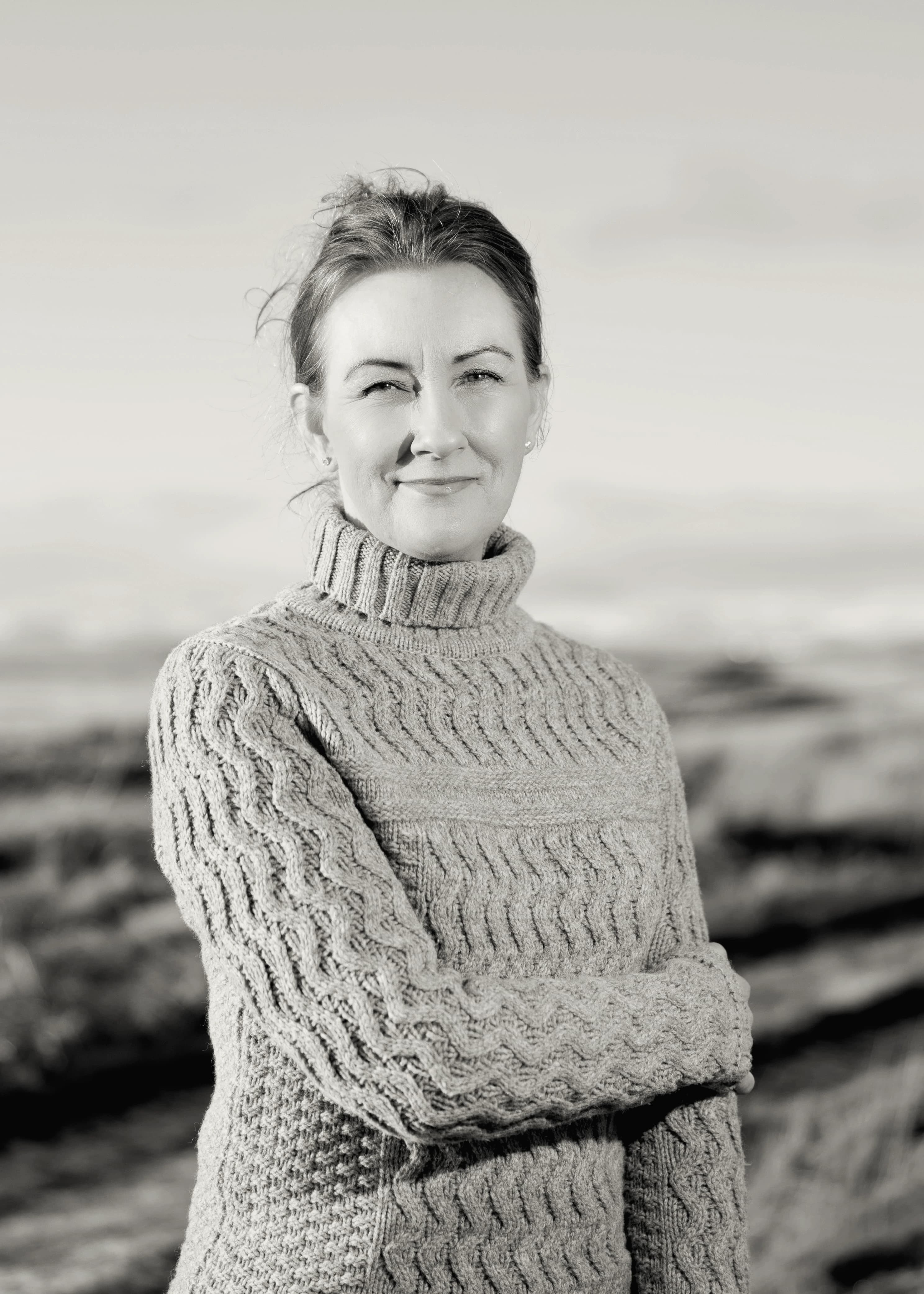
Birna Ásbjörnsdóttir, PhD
Researcher | Educator | Founder
My work sits at the intersection of intestinal barrier biology, the microbiome, nutrition and the microbiota–gut–brain axis.
I am particularly interested in the intestinal barrier as a dynamic interface between the external environment and human biology — how permeability is regulated, how microbial communities interact with the host, and how events within the intestine may communicate with systems throughout the body.
From nutrition to intestinal barrier.
My path into research began with nutrition, but increasingly led me towards a more fundamental biological question: how does the body negotiate its relationship with the external environment?
The intestine is one of the most important places where that relationship unfolds. Every day, its surface encounters food, microorganisms, microbial products and countless environmental signals. Yet it must simultaneously permit exchange, maintain protection and communicate with immune, metabolic, endocrine and neural systems.
That tension between exchange and protection became central to my doctoral research.
I completed my PhD in Health Sciences at the University of Iceland in 2024, focusing on intestinal permeability and the microbiota–gut–brain axis. My doctoral work examined zonulin-dependent intestinal permeability through complementary approaches including systematic review and meta-analysis, experimental models, microbiome analysis and transcriptomics.
Across this work, I became increasingly interested not simply in whether permeability is increased or decreased, but in how permeability is regulated — and what happens when that regulation is disturbed.
The barrier is not a wall.
The intestinal barrier is often described as though its ideal state were to remain closed.
Biologically, that is impossible.
A functioning intestinal barrier must allow nutrients and other essential molecules to cross while regulating exposure to microorganisms, microbial products and potentially harmful substances. It is therefore better understood not as a wall, but as a selective and responsive interface.
This distinction shapes much of my current work.
It also underlies what I describe as : the intestinal barrier must simultaneously permit exchange and provide protection.
Permeability itself is physiological. The scientifically interesting question is how that permeability is regulated.
Research across disciplines
View publicationsMy academic background spans nutritional medicine, evidence-based health care and health sciences.
I hold an MSc in Nutritional Medicine from the University of Surrey and completed postgraduate studies in evidence-based health care at the University of Oxford. My doctoral research was undertaken at the University of Iceland, and my research experience has also included work connected with Massachusetts General Hospital and Harvard Medical School in Boston.
My peer-reviewed work has examined intestinal permeability, zonulin, bovine colostrum, the intestinal microbiota and the microbiota–gut–brain axis. My research has also included the collaborative design of longitudinal human studies, including the Meals, Microbiota and Mental Health (MMM) study, developed to investigate relationships between diet, intestinal biology, the microbiota and mental health in children and adolescents.
Mucosal Immunology and Biology Research Center, Massachusetts General Hospital, Boston
2021–present
Researcher
Children’s and Adolescents’ Psychiatric Unit (BUGL), Landspítali University Hospital
2016–2025
Researcher
University of Iceland
2015–present
Lecturer
SYMBIOSIS, University of Iceland
2021–2023
Researcher
Speaking & teaching
For speaking and educational enquiriesSelected research presentations, university teaching and professional education.
International Human Microbiome Consortium Congress, Rome
2024
Research presentation
Gut Microbiota for Health World Summit, Miami
2019
Research presentation
Nordic Child & Adolescent Psychiatric Research Meeting, Turku, Finland
2018
Research presentation
University of Iceland
2015–present
University teaching
Professional education
Selected lectures and courses for healthcare and interdisciplinary audiences
Academic service
Peer review
BMJ Open
Systematic Reviews — BMC / Springer Nature
Egyptian Pediatric Association Gazette — Springer Nature
Cell Biochemistry and Function
Selected fellowships
Fulbright Foundation
2021
Leifur Eiriksson Foundation
2021
Nutricia Foundation
2021
University of Iceland Research Fund
2018
From research to understanding.
Scientific knowledge becomes useful only when it can be interpreted without losing its complexity.
A major part of my work is therefore translation: connecting research findings with a wider understanding of human biology while remaining clear about what the evidence can — and cannot — tell us.
BIRNA is a space for that work.
Here I publish peer-reviewed research, longer-form ideas and educational material exploring intestinal barrier biology, permeability, the microbiome, nutrition and gut–brain communication.
The aim is not to simplify science into certainty.
It is to make complex biology understandable while preserving uncertainty, context and scientific integrity.
Founder

Birna is the founder of Jörth, an Icelandic company working at the intersection of nature, nutrition and biological science.
Jörth translates selected areas of research and biological understanding into product development, while BIRNA remains the independent space for research, ideas and education.
Visit Jörth